How a “Cheap” Contractor Cost Me Two Rental Seasons
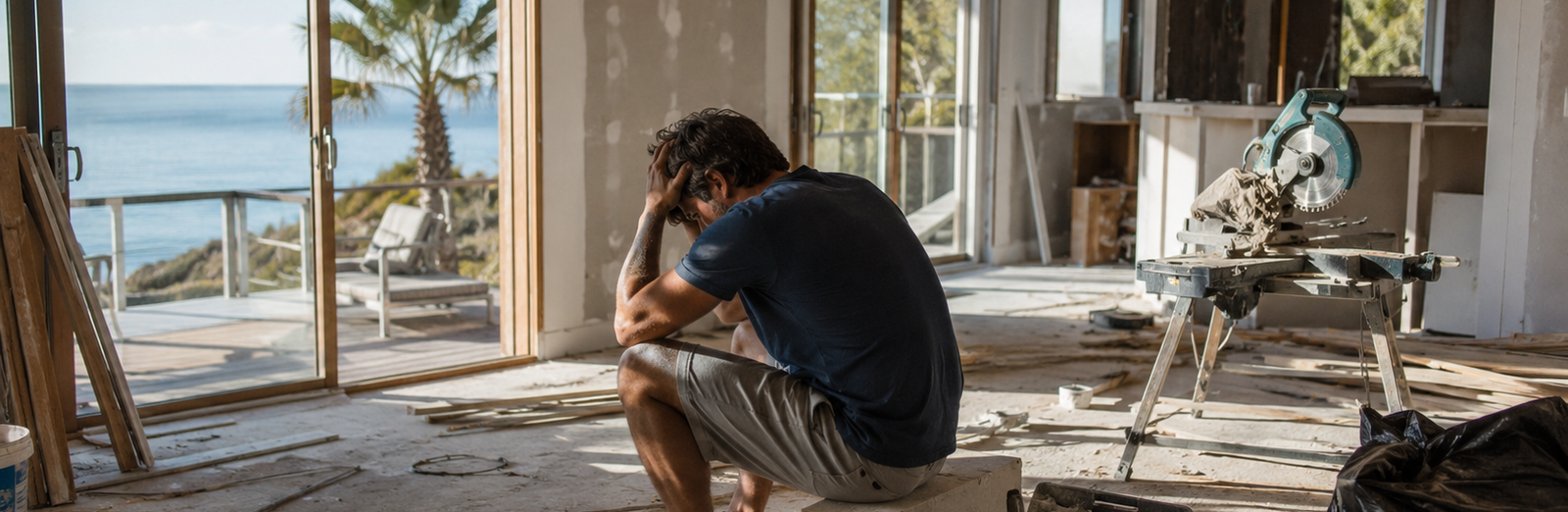
Building a house should be one of the most exciting milestones of your life.
But the reality of construction can quickly become something very different: delays, unexpected costs, constant decisions, and a level of stress you never planned for.
When I started my own house construction journey I made one of the most common mistakes homeowners and investors make.
I chose the cheapest contractor.
I was building a house intended for vacation rentals, so naturally, I wanted to keep the project within budget and save money wherever possible. When one contractor offered a significantly lower quote than the others, I thought I had found a smart way to reduce my construction costs.
I thought I was saving thousands.
I wasn’t.
What followed were endless delays, poor organization, broken promises, unfinished work, excuses, and constant uncertainty about when the house would actually be completed.
The project dragged on far longer than planned.
And the real cost wasn’t just what I paid the contractor.
I lost two full rental seasons.
Two summers in which the property should have been generating income were simply gone.
Once I calculated the lost rental revenue, the additional work required to correct poor workmanship, and the amount of time spent managing problems that should never have existed in the first place, the contractor with the “cheapest” quote became one of the most expensive decisions of the entire project.
The experience taught me something I wish I had understood from the beginning:
The cheapest construction quote is not necessarily the lowest-cost option.
If you’re planning a renovation, building a home, or developing a rental property, here are some of the lessons I learned the hard way.
1. The Low-Price Trap
A lower quote isn’t automatically a red flag.
But a quote that is dramatically lower than every other contractor’s deserves a much closer look.
Before comparing contractors based purely on the final number, compare what is actually included.
Look carefully at:
- the exact scope of work
- materials and specifications
- estimated start and completion dates
- payment milestones
- exclusions
- additional costs
- subcontractors
- warranties
- references from previous clients
A cheap quote can become extremely expensive if important work has been left out or if additional charges begin appearing once construction is underway.
Your payment schedule should also be connected to clearly defined stages of completed work rather than vague dates or promises.
And whenever possible, avoid paying large amounts upfront without a clear reason and written documentation.
2. Time Has a Cost

One of the biggest mistakes I made was focusing almost entirely on the construction budget.
Every single month your project is delayed is a month you are actively losing money.
Materials cost money.
Labor costs money.
But time costs money too.
If you’re building a property that is supposed to generate rental income, every month of delay can have a measurable financial impact.
For me, those delays meant losing thousands of euros in potential holiday bookings.
Even if you’re building your own home rather than an investment property, delays can still create additional expenses: rent, temporary accommodation, storage, financing costs, travel, and countless smaller expenses that slowly accumulate.
This is why a realistic construction schedule matters just as much as the financial budget.
You need a system that allows you to track:
- what should be happening each week
- what has actually been completed
- upcoming decisions
- contractor responsibilities
- deadlines
- payments
- delays and their causes
Without that visibility, it’s surprisingly easy for weeks — and eventually months — to disappear.
3. Screen Your Contractor Before You Sign
A beautiful portfolio isn’t enough.
Before signing a construction contract, take the time to investigate the person or company that will be responsible for your project.
Ask questions.
Check references.
Speak to previous clients if possible.
Find out whether their previous projects were completed on time and whether the final cost remained close to the original quote.
Pay attention not only to the answers you receive, but also to how the contractor communicates before you sign.
If communication is already difficult when they are trying to win your business, it is unlikely to improve once construction begins.
Free Contractor Screening Checklist
After going through this experience, I created the kind of contractor screening system I wish I had before starting my own project.
You can download the AMAIQBUILD Contractor Screening Checklist for free.
It includes practical questions to ask potential contractors, reference-check prompts, and important warning signs to look for before committing to a builder.
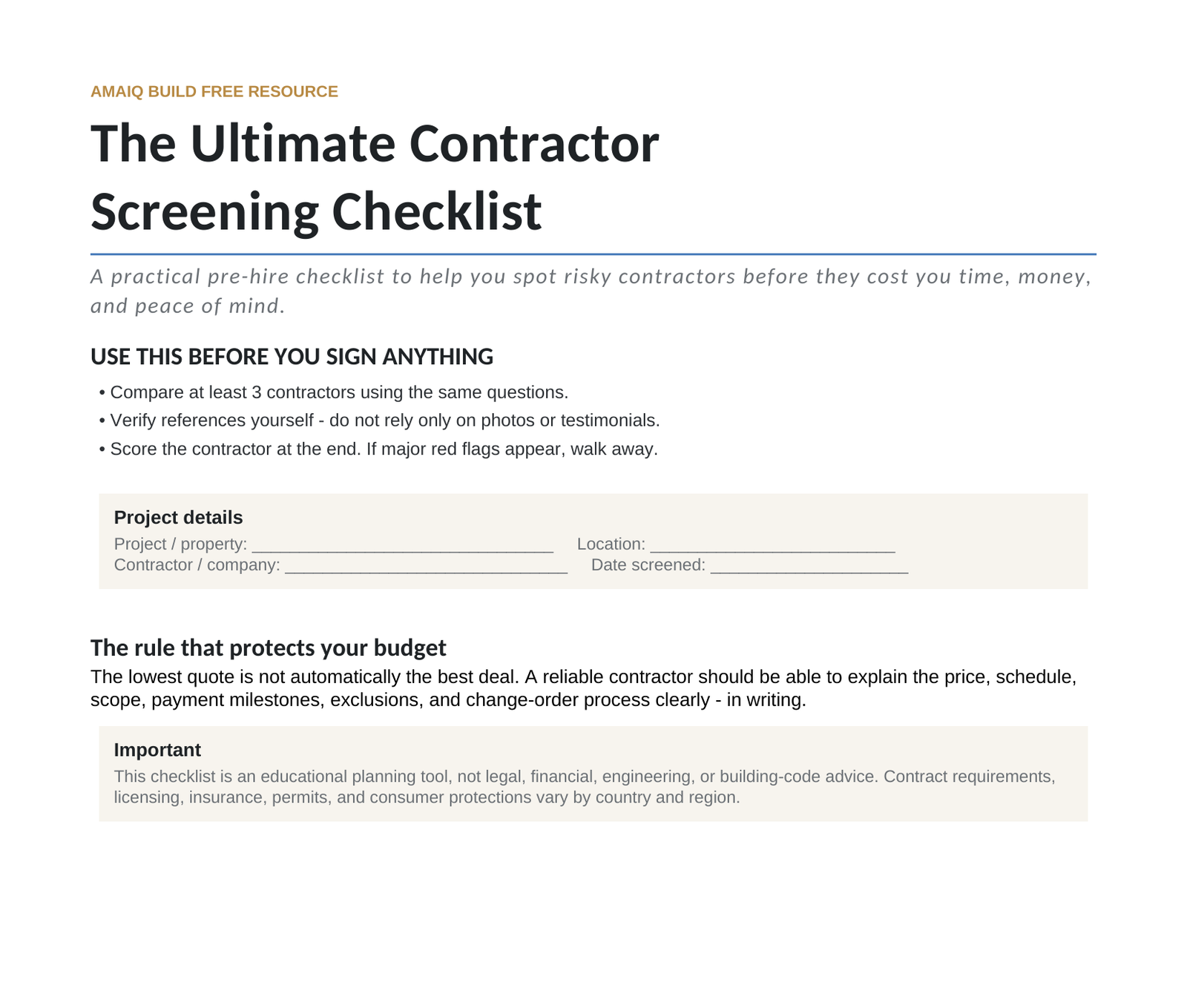
FREE CONTRACTOR SCREENING CHECKLIST
Don’t hire a contractor until you’ve checked these red flags.
Use this free checklist to compare contractors, verify references, review quotes and spot warning signs before you commit to a builder.
The Biggest Lesson I Learned
Construction decisions shouldn’t be based on price alone.
The right contractor isn’t necessarily the cheapest one — or even the most expensive one.
You are looking for someone who can demonstrate that they are reliable, organized, transparent, experienced, and capable of completing the work they promise.
If I were starting my project again today, I would spend far more time screening contractors, defining the scope of work, documenting expectations, and creating a clear project-tracking system before construction ever began.
Those few extra weeks of preparation could have saved me years of frustration.
Before You Hire a Contractor, Check This First
Choosing the wrong contractor can cost you far more than a low quote ever saves.
That’s why I created the AMAIQBUILD Ultimate Contractor Screening Checklist — a practical tool designed to help you compare contractors, verify important details, ask better questions, and spot warning signs before you sign anything.
Inside, you’ll find guidance to help you:
- compare contractors using the same criteria
- verify references, experience, registration and insurance
- review quotes, payment terms and project timelines
- identify common contractor red flags
- score each contractor before making your final decision
A few extra minutes of screening now can save you months of delays, unexpected costs and frustration later.

2 Comments