9 Renovation Decisions That Get Expensive Once Work Starts
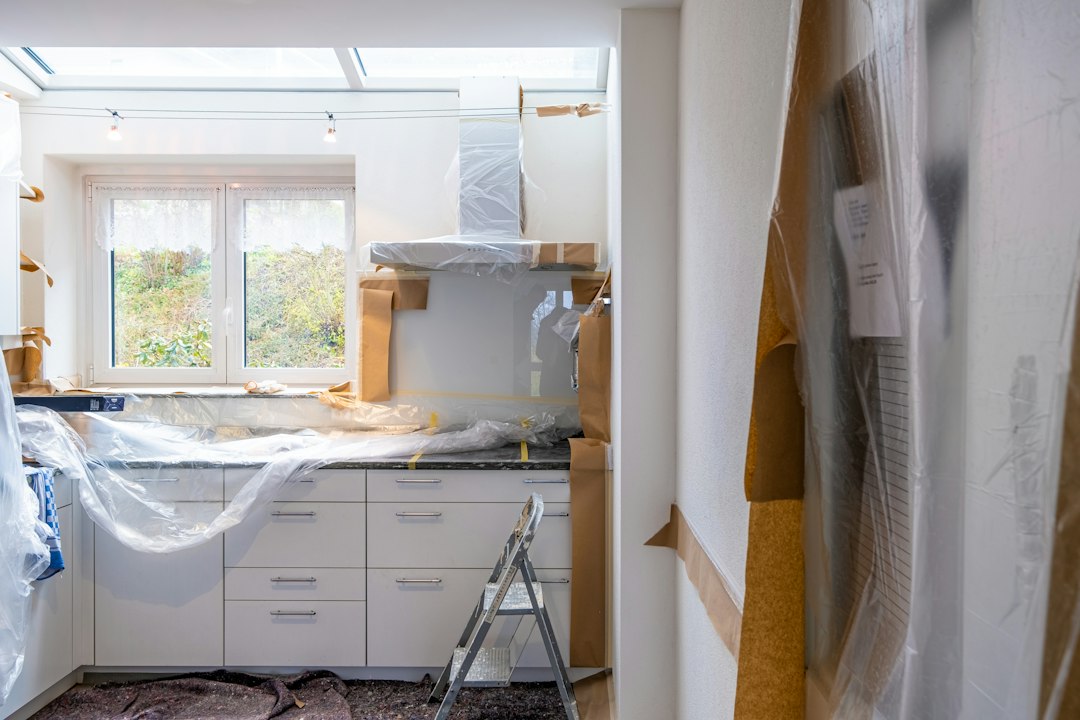
Renovations do not always become expensive because something goes terribly wrong.
Sometimes the extra cost comes from a much simpler problem: a decision that was left until too late.
You change the tile after it has been ordered. You realize you wanted more storage after the cabinetry is already planned. You move a light after the wall is finished. You add one small job, then another, and suddenly the original quote no longer looks anything like the final cost.
After going through building and renovation decisions myself, I have become much more interested in what can be decided before the work begins.
Before Demolition Day, I Would Ask One Question
What could become expensive, awkward or frustrating if I leave this decision until the renovation is already underway?
These are the nine decisions I would want settled first.
1. Decide Exactly What Is – and Is Not – Part of the Renovation
One of the easiest ways for a renovation to grow is for the scope to stay vague.
You start with the kitchen. Then the flooring next to it suddenly looks tired. Then the hallway feels unfinished. Then you think the doors should probably be changed while everyone is already there.
None of those ideas are necessarily bad. The problem is when they are added one by one after the budget, quote and timeline were built around a smaller project.
Before work starts, I would write down two simple lists: what is included and what is not included. If something moves from one list to the other later, I would treat it as a real change, not a tiny extra.
2. Decide How You Want the Room to Work Before You Choose How It Looks
It is much more fun to choose colors, tiles and taps than to think about where the vacuum cleaner will live. But I would make the practical decisions first.
Where will furniture go? What needs to be stored? Which doors need room to open? Where do you actually use small appliances? Where do bags, coats, towels, cleaning products or laundry end up in real life?
A beautiful room that is annoying to use every day is not a great result. Changing the layout once work has started can affect several other decisions at the same time.
3. Decide Your Real Budget Ceiling
I would separate the target budget from the absolute maximum. If those are the same number, every unexpected expense becomes stressful.
I would also decide in advance which parts of the renovation matter most. If the budget starts getting tight, it is easier to make a calm decision when you already know what you are willing to simplify and what you do not want to compromise on.
A useful rule: do not wait until you are over budget to decide what your priorities are.
4. Decide the Important Materials Earlier Than Feels Necessary
Some choices can wait. Others quietly affect ordering, installation and timing.
I would want the important items chosen early enough that nobody is waiting for me to make a rushed decision on site. Flooring, tiles, sanitary items, appliances, lighting, cabinetry, worktops and major fixtures are the types of choices I would think through early.
Choosing early does not mean buying everything immediately. It means knowing what you want, what it costs, whether it is available and what the backup plan is if it suddenly is not.
5. Decide Who Is Buying What
This sounds almost too simple to matter, but confusion here can create delays, duplicate orders and awkward conversations.
I would want it clear whether I am buying an item, the contractor is supplying it, or it is already included in the quote.
I would also record the agreed model, finish, price and expected delivery date. “We talked about a black tap” is not the same as knowing exactly which tap is arriving and who is responsible for ordering it.
6. Decide the Small Everyday Details Before They Become Hard to Change
The expensive decisions are not always the glamorous ones.
I would think about where I actually need sockets, charging points, lighting, hooks, shelves, storage and mirrors. These details feel small at the beginning, but once walls, finishes or cabinetry are completed, a small change can mean undoing work that was already finished.
I would rather spend an extra hour walking through the room on paper than pay to change something later.
7. Decide How Extra Work Will Be Approved
If additional work comes up, I would want to know the cost and the effect on the timeline before agreeing to it whenever possible.
Several “small extras” can become a very large final invoice. And if decisions only live in phone calls or casual conversations, it becomes much harder to remember what was agreed later.
This is one of the reasons I care so much about keeping changes in writing. My own experience with a contractor who looked cheaper at the beginning taught me how expensive a project can become when the real cost is not only the first quote. I wrote more about that in How a “Cheap” Contractor Cost Me Two Rental Seasons.
8. Decide How You Will Actually Live Through the Renovation
It is easy to plan the finished room and forget the weeks in between.
Will you have a working bathroom? Somewhere to cook? A place for furniture that has to move? Space for deliveries? What happens with children, pets, parking or access while work is happening?
Sometimes the cheapest construction plan creates the most inconvenient living situation. Knowing that in advance lets you decide whether the savings are actually worth it.
9. Decide Where Every Important Renovation Detail Will Live
A renovation can create an impressive amount of information.
Quotes are in email. Measurements are in your notes app. Product screenshots are on your phone. A payment amount is buried in a message. The delivery date is somewhere in another conversation.
That works until you need one specific detail quickly.
I would choose one system before the project starts and keep the key information there: scope, quotes, budget, orders, payments, changes, decisions, site notes, warranties and unfinished items.
The Best Time to Make a Renovation Decision Is Before Someone Is Waiting for It
Not every surprise can be prevented. Renovations have a way of revealing things nobody could see at the beginning.
But there is a big difference between an unavoidable surprise and an expensive late decision.
The more I can decide, price and record while there is still time to think, the less pressure there is when the project is moving and somebody needs an answer immediately.
If Your Renovation Information Is Already Scattered Everywhere
This is exactly why I created the Home Renovation Project Blueprint. It is not about making renovation complicated. It is about giving the practical details one place to live before they disappear into screenshots, messages and pieces of paper.
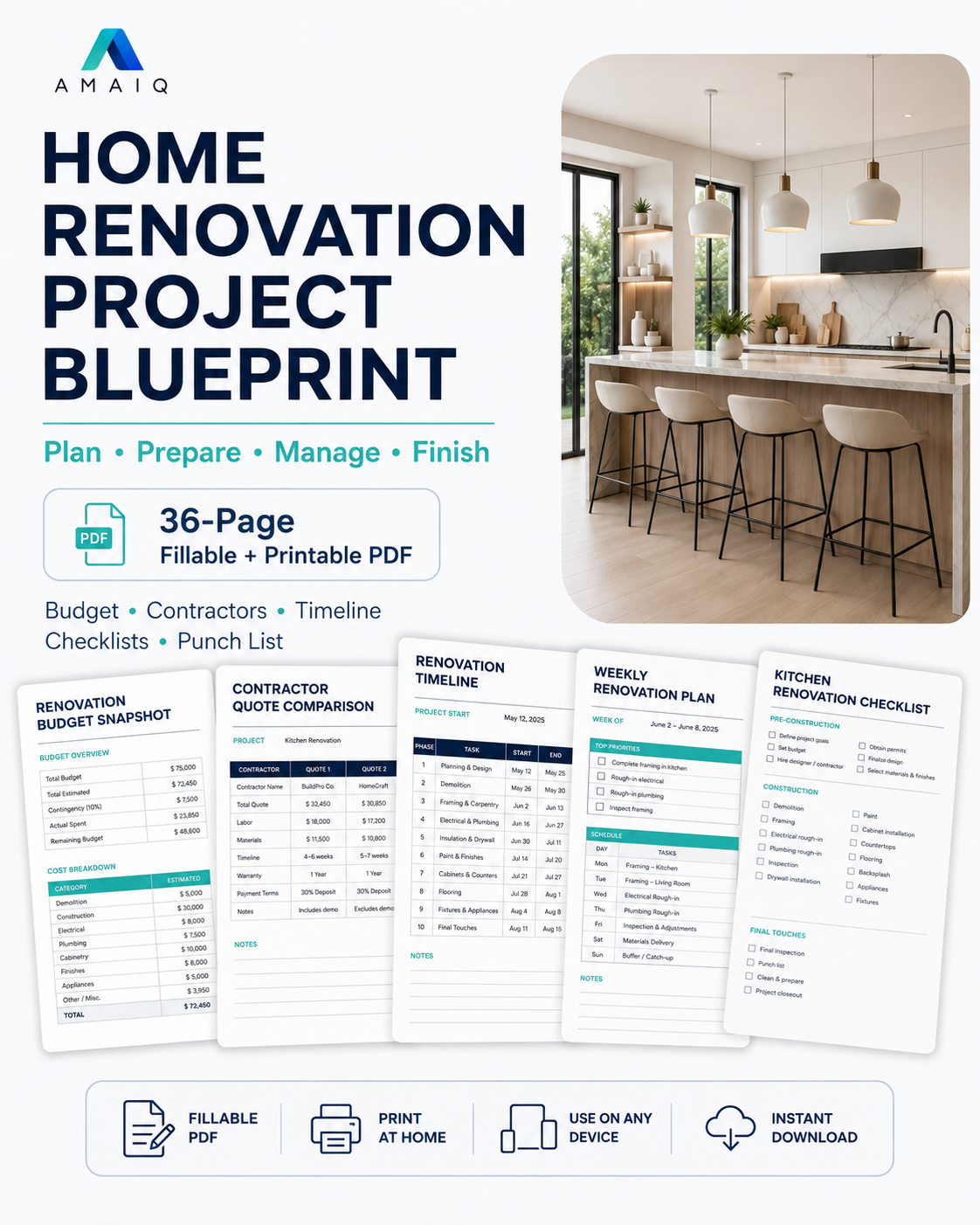
The 36-page fillable and printable PDF is designed to help keep your scope, budget, contractor quotes, orders, payments, change orders, decisions, site visits, punch list and final records organized throughout the project.
Shop Coming Soon — The Home Renovation Project Blueprint will be available when the AMAIQBUILD shop opens.
2 Comments